


Limits
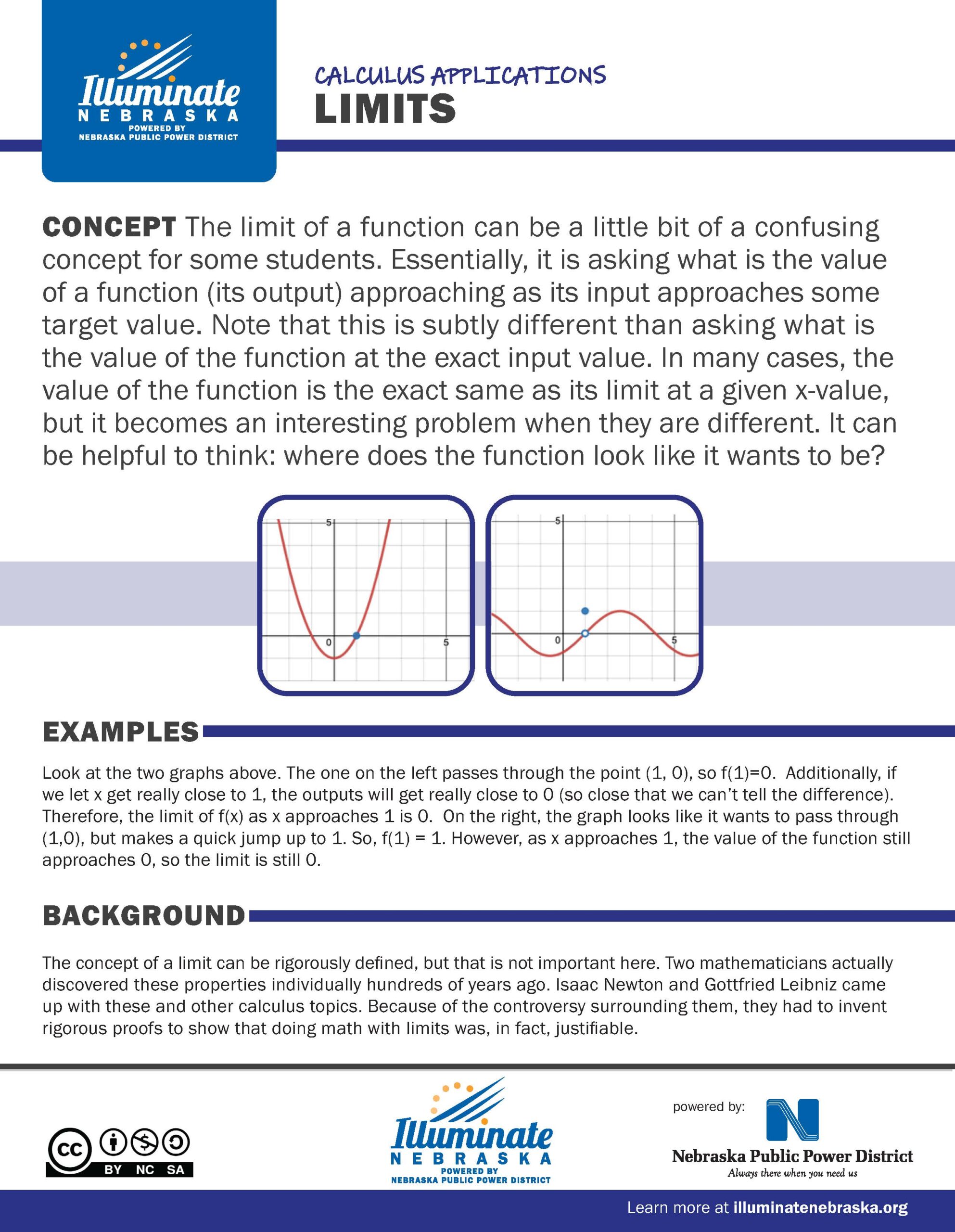
The limit of a function can be a little bit of a confusing concept for some students. Essentially, it is asking what is the value of a function (its output) approaching as its input approaches some target value. Note that this is subtly different than asking what is the value of the function at the exact input value. In many cases, the value of the function is the exact same as its limit at a given x-value, but it becomes an interesting problem when they are different.
Derivatives
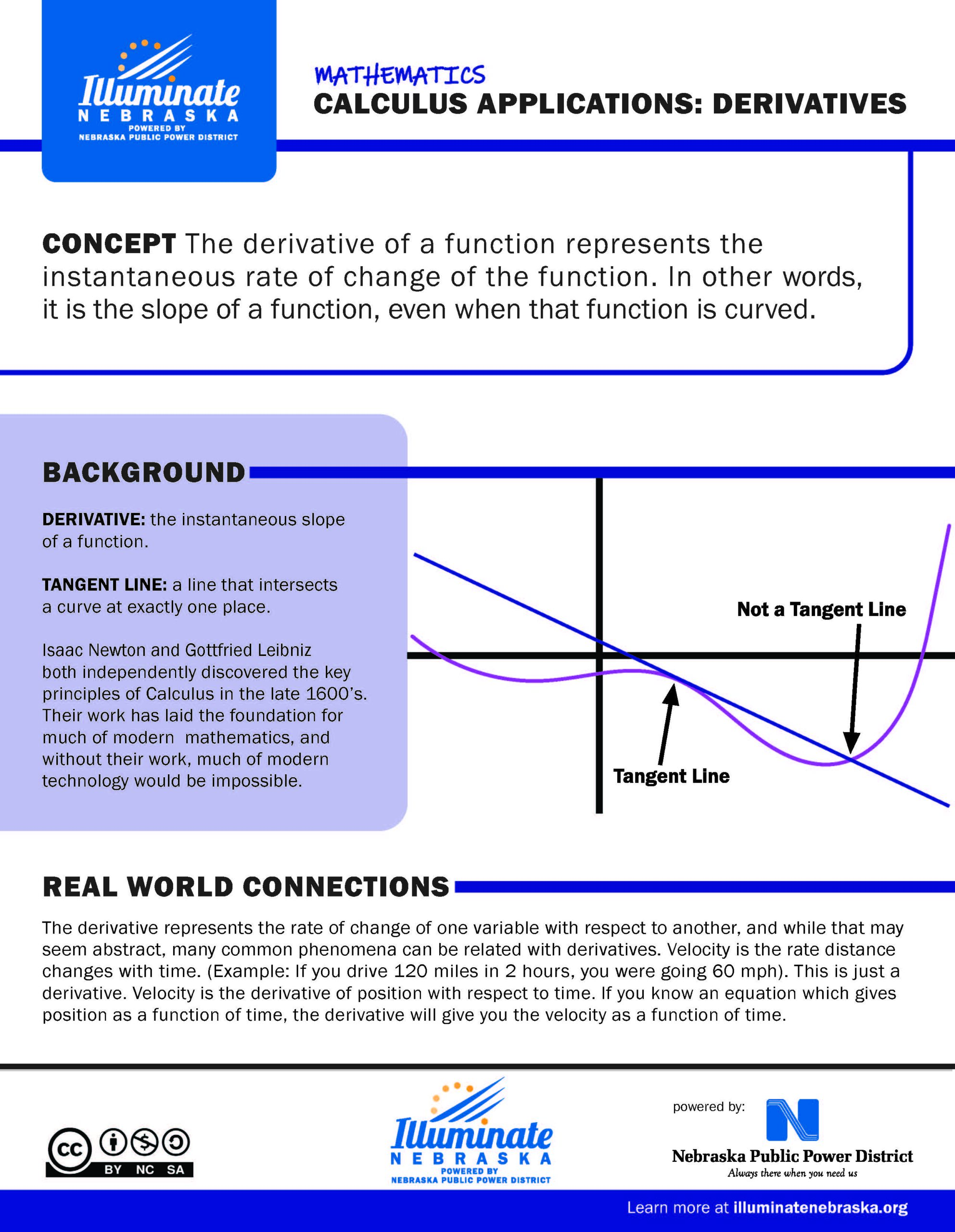
The derivative of a function represents the instantaneous rate of change of the function. In other words, it is the slope of a function, even when that function is curved.
Proportional Relationships
A proportional relationship is a type of mathematical relationship between two variables where their ratio remains constant. This means that as one variable increases or decreases, the other variable also changes in a consistent way. Proportional relationships can be represented by linear equations in the form y = kx, where k is the constant of proportionality.
Integrals
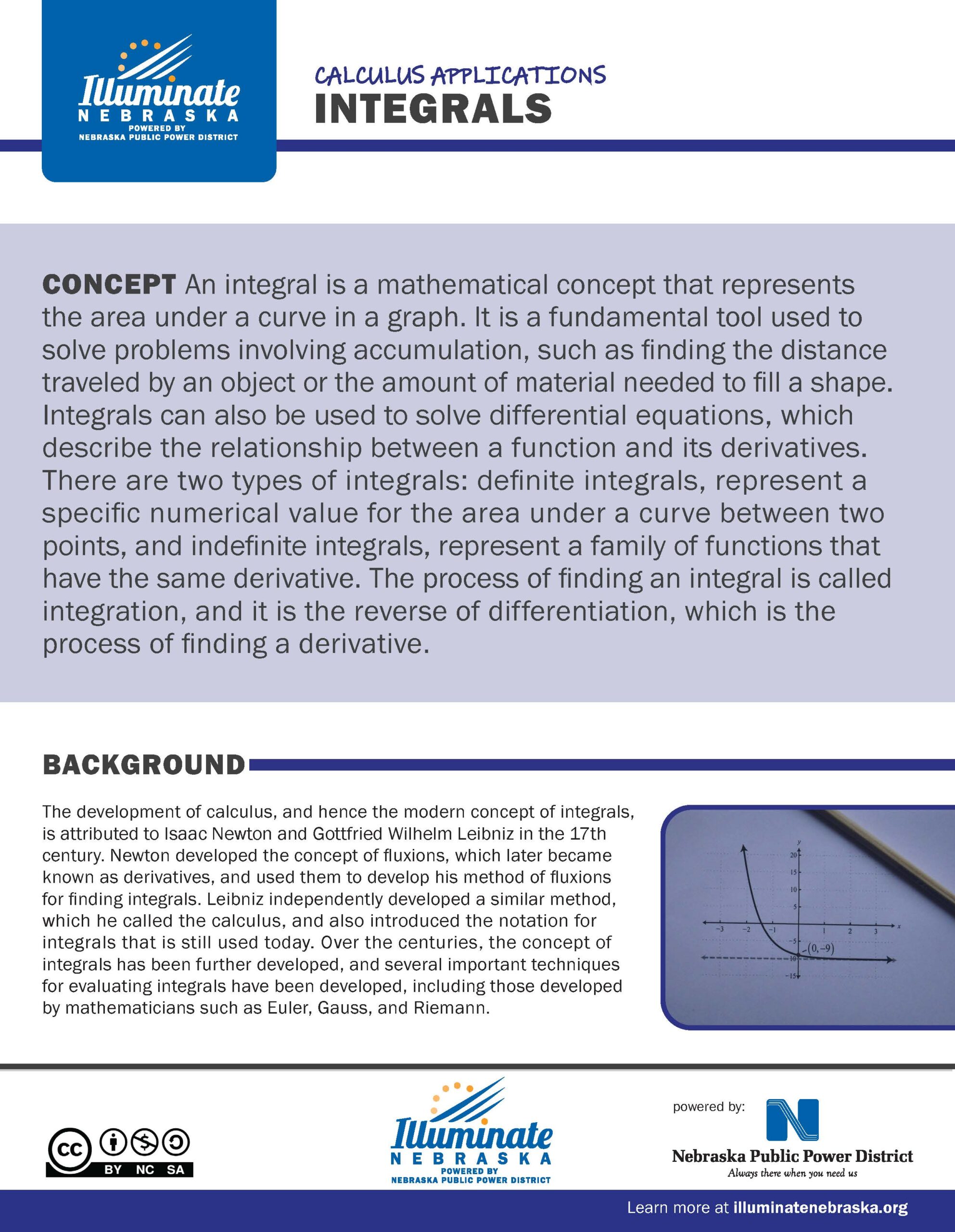
An integral is a mathematical concept that represents the area under a curve in a graph. It is a fundamental tool used to solve problems involving accumulation, such as finding the distance traveled by an object or the amount of material needed to fill a shape. Integrals can also be used to solve differential equations, which describe the relationship between a function and its derivatives.

Applications to Electrical Currents
Electrical circuits are the backbone of modern technology, used in a vast array of devices and systems ranging from small electronic gadgets to utility scale power grids. Electrical circuits provide the path for electrical current to flow.