

Mechanisms
Engineering

Basic Components of Most Machines
Most machines have three basic components: an input system, a processing system and an output system. The input system allows the machine to receive data or instructions, which can be in various forms, such as physical input, electrical signals or software input. The processing system interprets and manipulates the input using some algorithm or programming logic to produce the desired output, which is then conveyed through the output system in a format the user can understand.
Mechanical Advantage
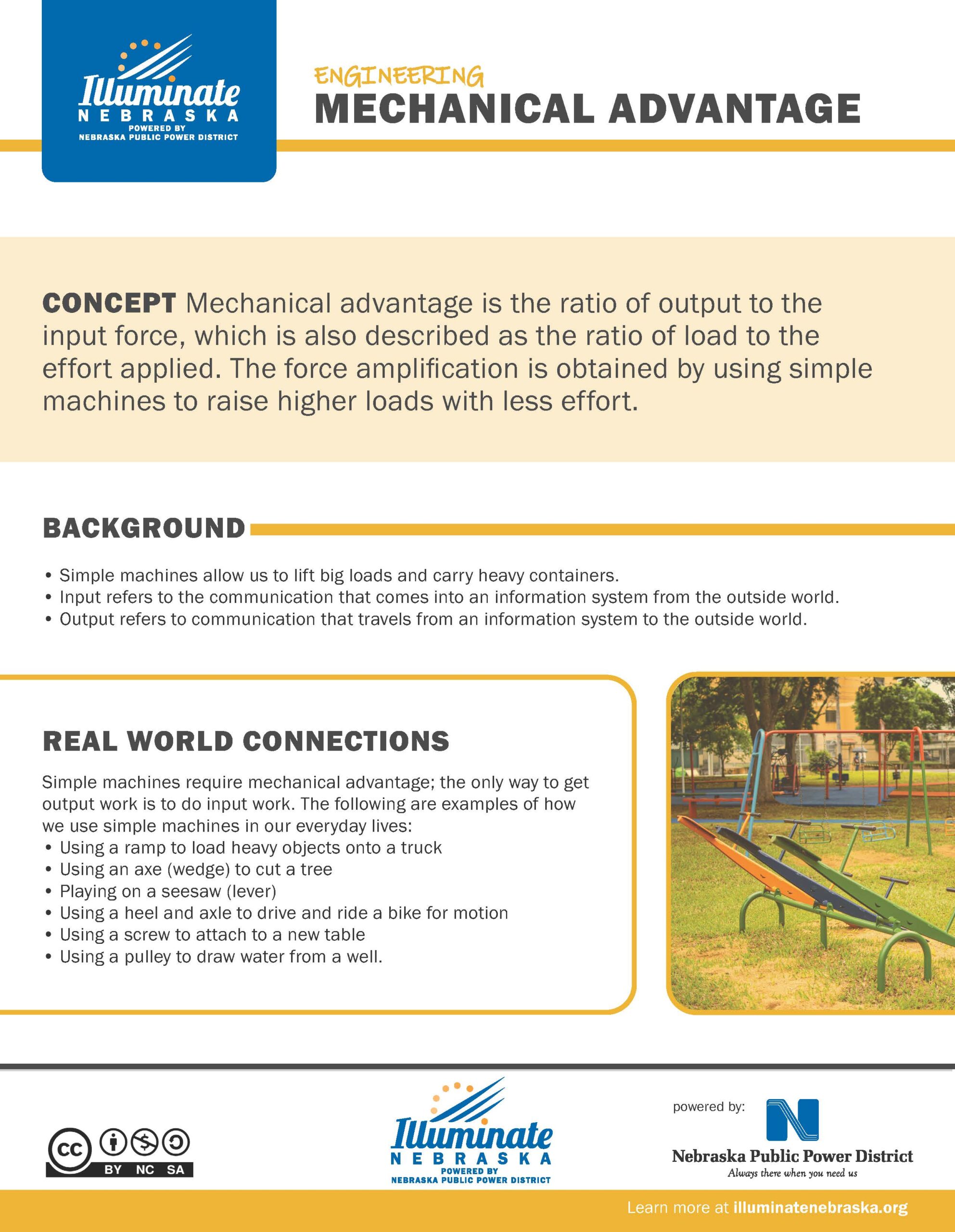
Mechanical advantage is the ratio of output to the input force, which is also described as the ratio of load to the effort applied. The force amplification is obtained by using simple machines to raise higher loads with less effort.
Simple Machines
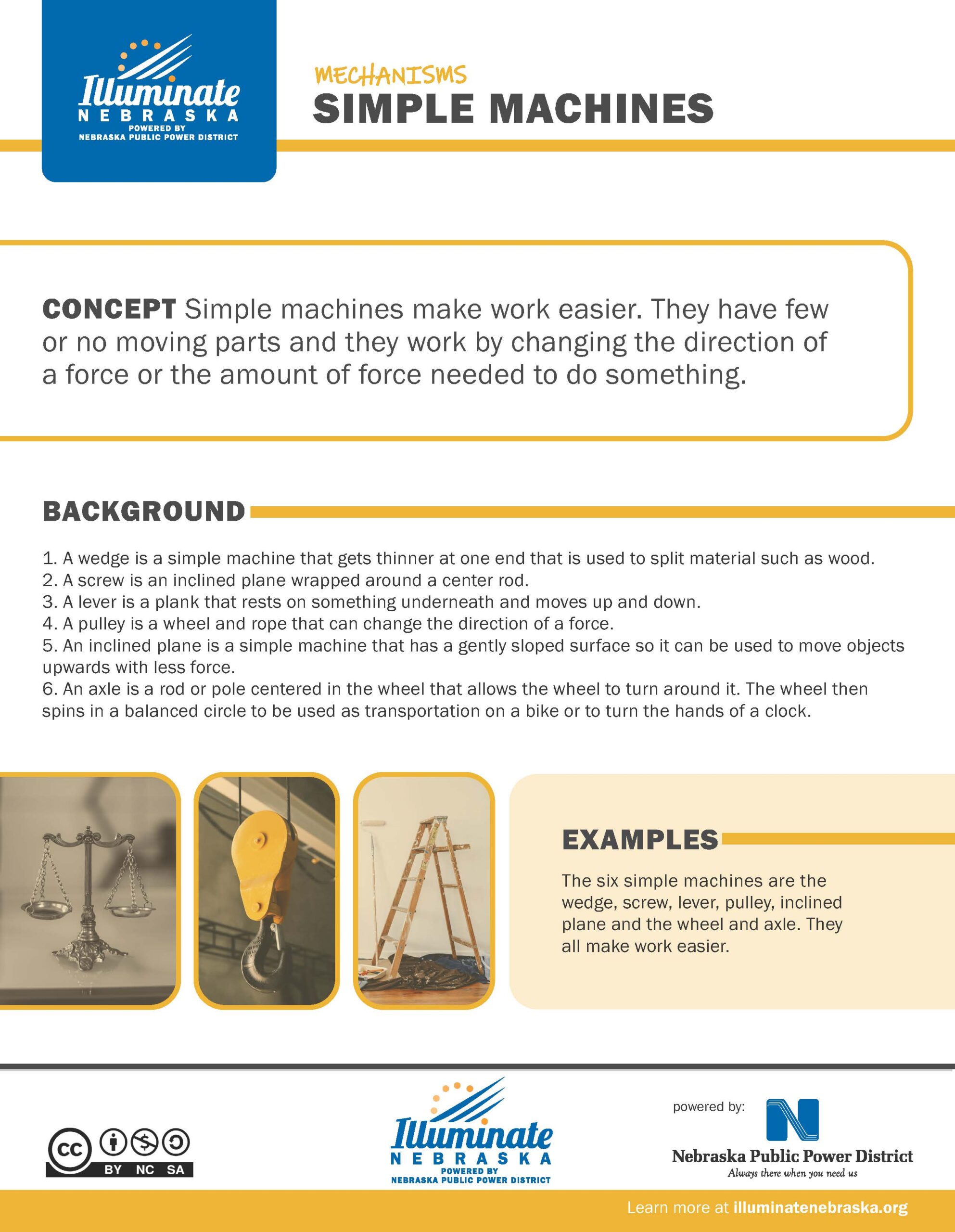
Simple machines make work easier. They have few or no moving parts and they work by changing the direction of a force or the amount of force needed to do something.

Build Techniques
Engineering build techniques vary depending on the structure or system being built and the materials and tools available. Common engineering build techniques include welding, soldering, brazing and riveting, which are used in metal fabrication. Woodworking techniques such as sawing, drilling and sanding are used for building wooden structures. Other methods used in engineering builds include 3D printing, laser cutting and CNC machining, which are becoming increasingly popular due to their precision and efficiency.

Sequential Mechanics
Sequential Mechanics is a branch of engineering that deals with studying the behavior and motion of objects subject to external forces, particularly in a sequence of events or actions. It is concerned with analyzing how a system’s components interact with each other over time, focusing on understanding and predicting how they will move and respond to different stimuli.